
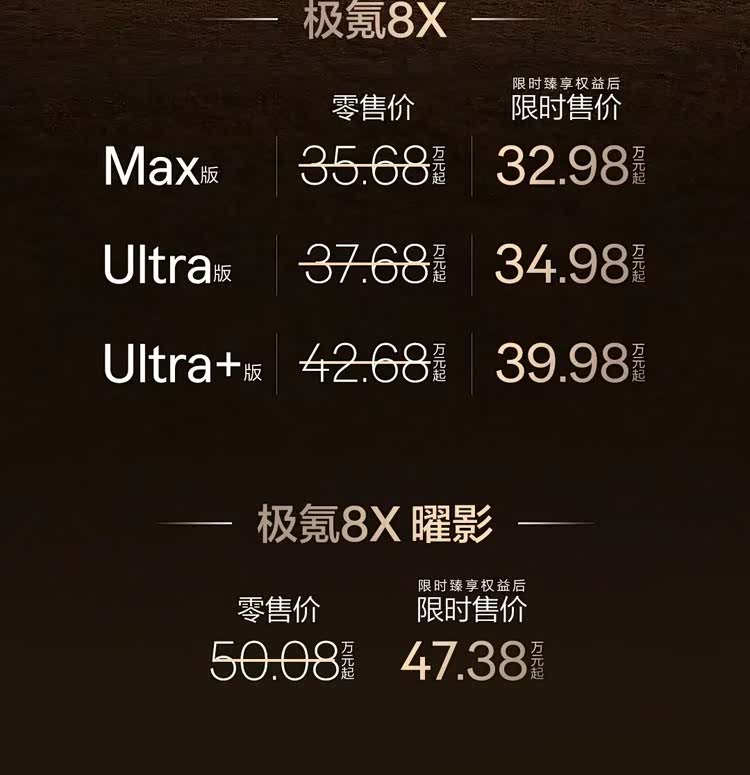
On April 17, the Zeekr 8X officially launched. It comes in four variants, with a limited-time price range of $48,500 to $69,676, and the new vehicle is available for immediate delivery upon launch.
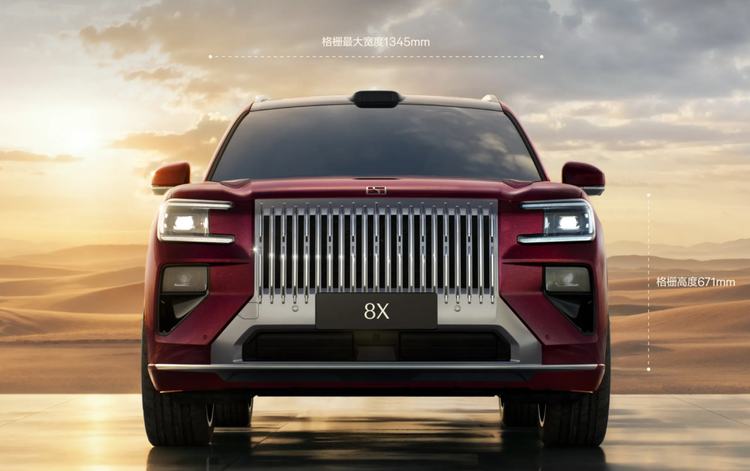
The exterior of the Zeekr 8X inherits the design style of the 9X, featuring an integrated vertical grille with a widened lower section, reminiscent of the 'Cullinan'. It is equipped with dual AGS intelligent active grille shutters, which can intelligently adjust the opening, closing, and angle of the grille based on vehicle speed and airflow.
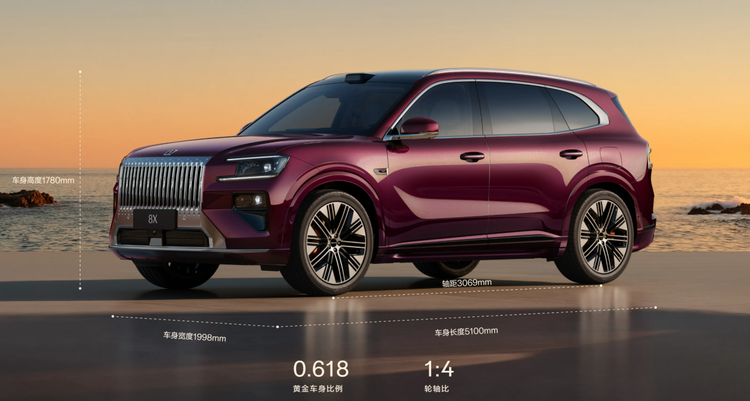
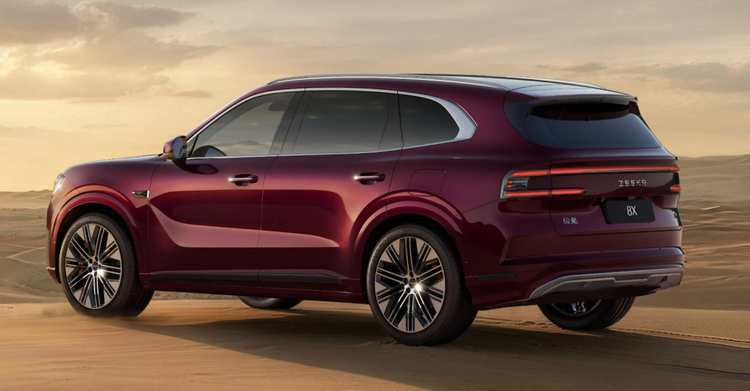
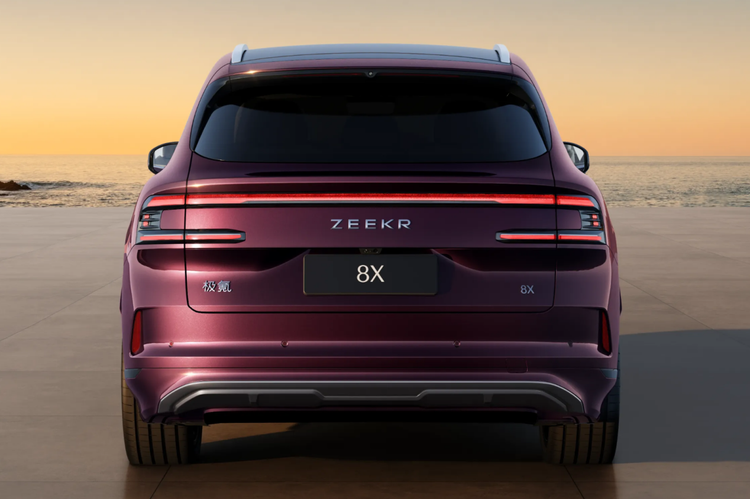
The body dimensions are 5100×1998×1780 mm, with a wheelbase of 3069 mm. The Yao Ying version has the same dimensions, but the width increases to 2026 mm. Paired with large-sized wheels, it exudes a strong sense of power. It adopts a full-width taillight cluster with the ZEEKR logo embedded in the center, complemented by a roof spoiler, giving it a more distinctive look and avoiding the bulkiness of traditional SUVs.
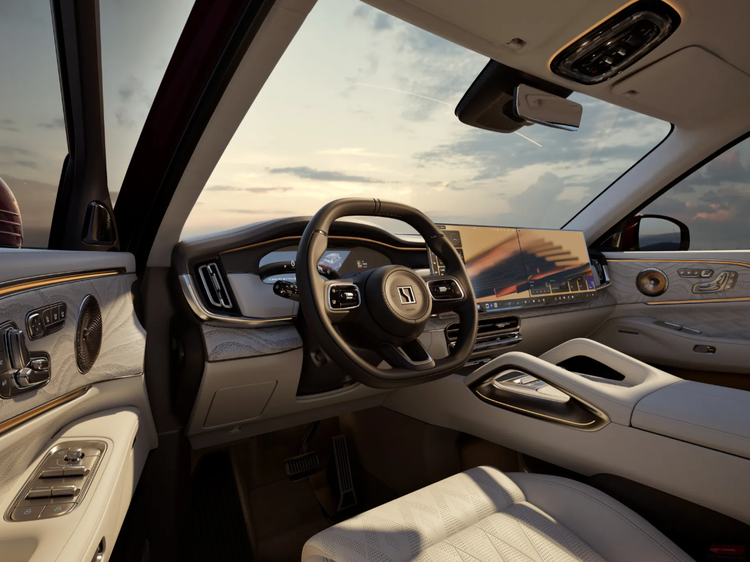
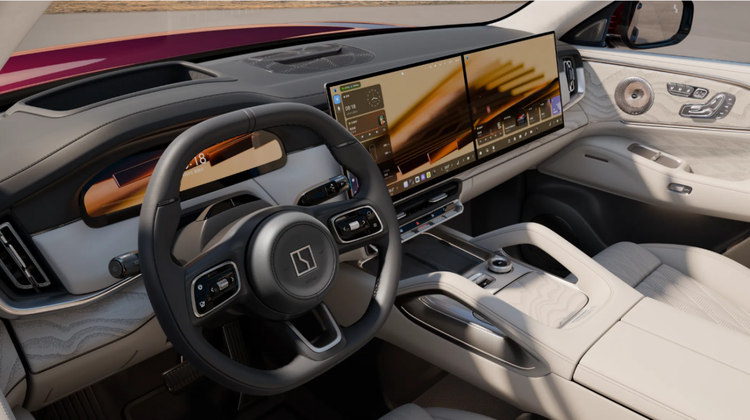
The interior is genuinely luxurious, equipped with a refrigerator, large screens, and plush seating. The Zeekr 8X offers 5-seat and 6-seat versions, featuring a 16-inch 3.5K central control screen, while the Yao Ying version includes a 16-inch 3.5K dual-screen setup for the driver and front passenger. The seats are upholstered in Nappa leather, with all seats supporting electric adjustment. The Yao Ying version uses a combination of Alcantara and Nappa materials for the seats, and the rear row offers zero-gravity seats.
Additionally, the new vehicle debuts the next-generation G-ASD advanced intelligent driving assistance system, comes standard with the Qianli Haohan H7 intelligent driving solution, and offers the optional Qianli Haohan H9 system.
Models equipped with the Qianli Haohan H7 feature a total of 31 sensors. The Qianli Haohan H9 version includes one 520-line long-range LiDAR and four high-precision solid-state LiDARs, bringing the total number of sensors to 43, and utilizes a dual NVIDIA Thor chip platform. Intelligent driving assistance has been a weak point for Zeekr; it remains to be seen if the introduction of G-ASD can turn this weakness into a strength and compete with Huawei.
The new vehicle adopts a 900V high-voltage architecture and is powered by a 2.0T plug-in hybrid system, with the engine delivering a maximum power of 205 kW, dual motors producing 660 kW, and a three-motor megawatt electric drive system achieving a combined power of 1030 kW. The three-motor version accelerates from 0 to 100 km/h in 2.96 seconds, while the dual-motor version does it in 3.7 seconds. These performance figures are impressive for a mid-to-large SUV, surpassing even V8-powered BMW 5 Series models.
The new vehicle offers two battery pack capacities: 55 kWh and 70 kWh, with CLTC pure electric ranges of 318-410 km and combined ranges of 1357-1416 km. The Yao Ying version has a CLTC pure electric range of 330 km and a combined range of 1210 km. The battery capacity is not as large as some competitors, but it is sufficient for short-distance commuting with weekly charging, making it adequate for daily use.
For the chassis, the new vehicle uses a front double-wishbone and rear integrated multi-link independent suspension, equipped with the Haohan AI digital chassis, active stabilizer bars, closed dual-chamber air suspension, and dual-valve CCD electromagnetic dampers. Through AI perception and digital control, it also features 13 all-terrain modes, with the system automatically switching based on current conditions in different usage scenarios.
In addition, the Yao Ying version includes two hidden functions: infrared night vision, which provides an extra 'perspective' for the vehicle, and a one-touch Boost mode that can instantly deliver stronger acceleration and driving excitement when needed.
The Zeekr 8X's main competitors fall into two categories: traditional luxury fuel-powered SUVs such as the BMW X5 and Mercedes-Benz GLE, and domestic high-end new energy models like the Li Auto L8, AITO M8, and Xpeng GX.
The Zeekr 8X carves out a distinct performance-oriented path among its peers, neither focusing on family comfort nor dedicated to hardcore off-roading, precisely targeting high-end users who value driving dynamics and overall experience. It avoids the family-oriented market dominated by the Li Auto L8, instead emphasizing five-seat high performance and luxury quality. The plug-in hybrid architecture balances performance and range without anxiety, catering to the needs of different consumer groups. However, in the Chinese automotive market, vehicles with a sporty performance focus have generally not sold well. Can the Zeekr 8X change this trend? We'll have to wait and see.