
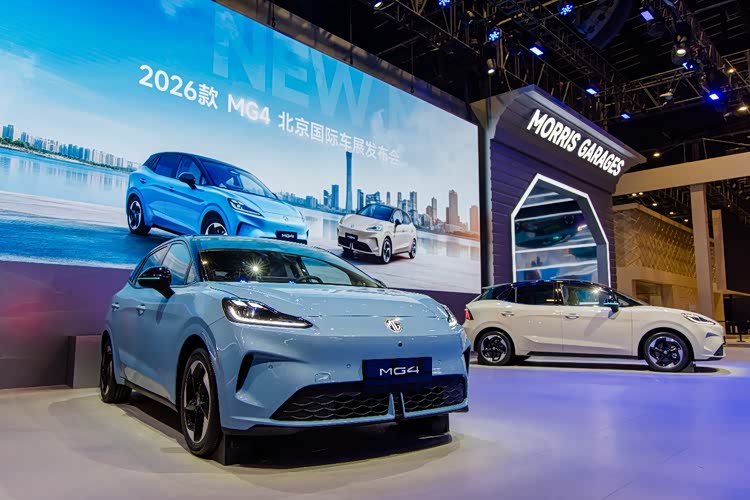
Today (April 24, 2026) at the Beijing Auto Show, the 2026 MG4 officially debuted with a limited-time subsidy price starting at $9,676. This price is even lower than the entry-level Geely Staryun. The MG4 offers a starting range of 437 km, while the Staryun entry version is in the 300 km class. This is not a minor adjustment; it's a direct price cut!
Monthly Sales Exceed 10,000: MG4 Is Already a Hit
Let's talk sales. Among all-new electric vehicles launched in 2025, only four models have achieved steady monthly sales exceeding 10,000 units: NIO ES8, Xiaomi YU7, Li Auto i6, and the MG4. The MG4 is currently the only non-luxury brand model in the compact electric hatchback segment with stable monthly sales above 10,000 units.
The significance of this figure: In the compact electric hatchback segment, apart from the Wuling Hongguang MINI and Geely Staryun, no third model has truly achieved high volume in recent years. The MG4 has done it. Moreover, the official target is to increase monthly sales from $1,471 to $2,941. Whether it can achieve this remains to be seen, but it at least shows one thing—MG has enough confidence in the pricing and product strength of this car.
What Has Changed in the 2026 Model?
Although it's called an annual facelift, the actual configuration upgrades are substantial. The focus is on four dimensions.
First, range and powertrain. The entire lineup is equipped with a standard 120 kW motor, achieving 0-50 km/h in 3 seconds and 0-100 km/h in 7.2 seconds. In the same class, models like the Geely Staryun and Leapmotor A10 typically have motors with 70-80 kW. The MG4 is a level above them.
Two range versions: 437 km and 530 km. The 437 km version starts at a limited-time price of $9,676, while the 530 km version starts at $13,206. Compared to the BYD Dolphin's 500+ km version, it's over $2,941 cheaper.
Second, technology democratization. The 2026 MG4 uses semi-solid-state batteries, and it's not exclusive to the top trim—it's standard across the lineup. This is the world's first mass-produced car with semi-solid-state batteries, bringing cutting-edge technology directly to a price under $14,706. It also retains the CTB (Cell-to-Body) technology, deeply integrating the battery with the vehicle body floor. Neither of these technologies is available in competitors at the same price point.
Third, intelligent driving and cockpit. The 2026 model is equipped with Horizon Robotics' intelligent driving solution, based on a game theory large model, with highway NOA and intelligent parking capabilities. Parking scenarios have been significantly upgraded: nose-in parking, dead-end street parking, and DIY custom parking spot drawing are all supported.
For the intelligent cockpit, OPPO phone-car connectivity has been further enhanced, with full APP voice control. Wireless CarPlay has been added, so Apple users can connect as soon as they get in. There's also an interesting feature—remote voice commands outside the car, allowing you to move the car or open doors without getting out.
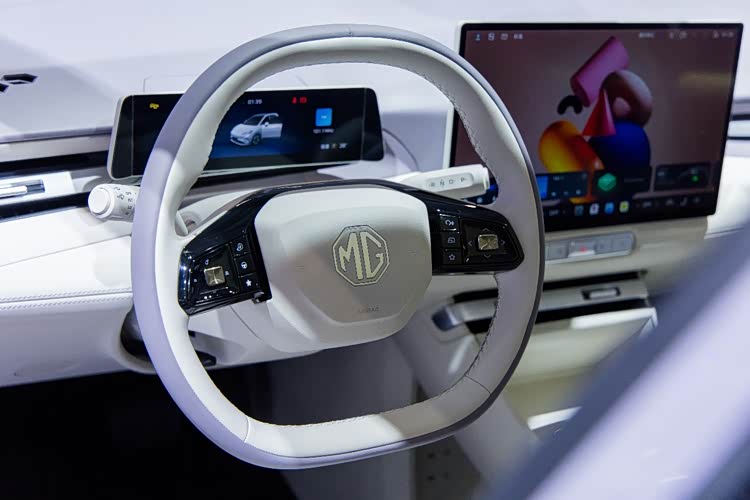
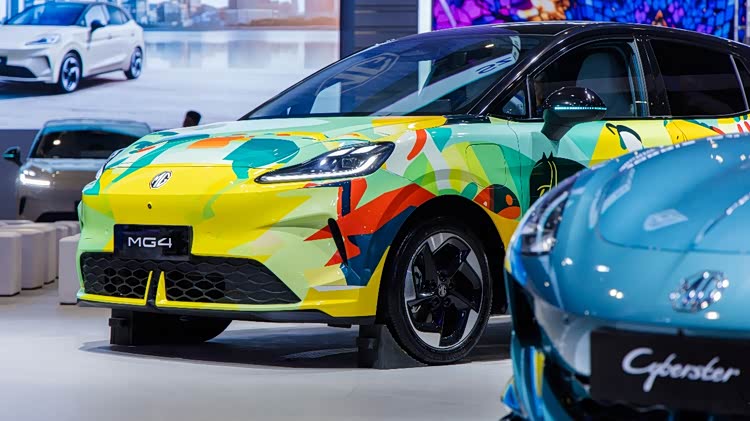
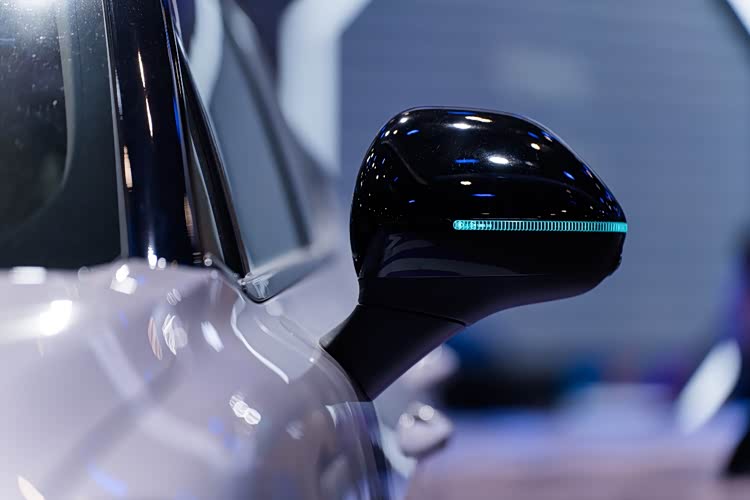
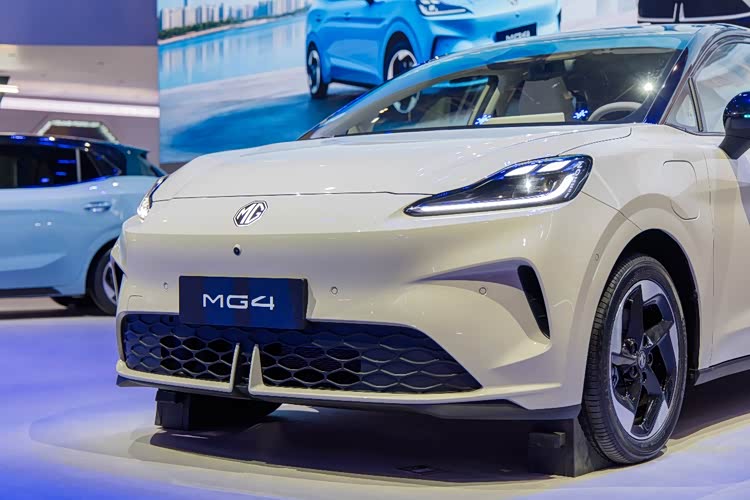
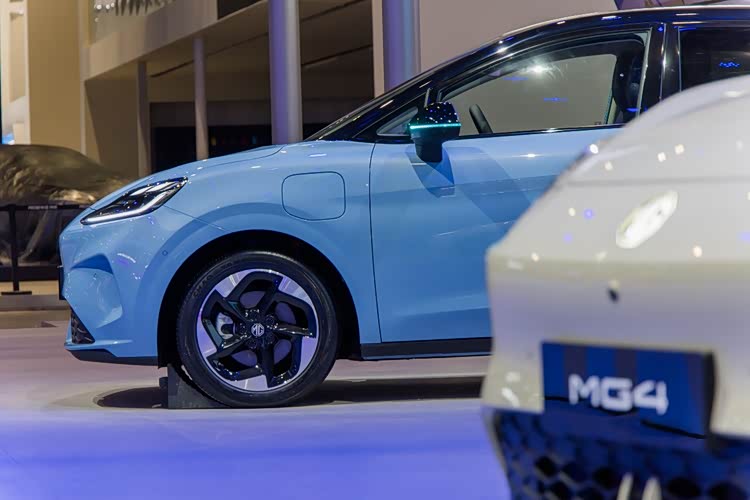
Finally, comfort features. The 2026 MG4's front seats integrate heating, ventilation, eight-point massage, and memory adjustment. It features a 15.6-inch 2.5K screen, an 8.88-inch instrument cluster, and a new nap mode. The interior adds a Starry Night Purple color scheme and a two-tone steering wheel. Exterior colors include Ice Crystal Blue and Almond Rice, along with a black floating roof and 17-inch Star Ray wheels.
Each Trim Level Is Targeted
The pricing strategy for the 2026 MG4 is clear: each trim level targets a specific need. The 437 km Freedom Edition enters the price range under $11,765, with 4,000 yuan worth of additional features compared to the old model, suitable for budget-sensitive users. The new 437 km Smart Edition lowers the threshold for intelligent driving, allowing more people to access highway NOA and automatic parking.
530km Smart Edition, $735 more expensive than the 437 Smart Edition, offers 100km more range, CATL cells, and silver-coated front windshield. Marginal cost-effectiveness is extremely high. Official data shows that the Free Edition and above will be the sales主力, aiming to drive the entire price range upward from the entry level.
How to view competitors?
I believe the Star Wish and Leapmotor A10 are its direct competitors. The MG4 is 135mm longer than the Star Wish (4395mm vs 4260mm), has a 50mm longer wheelbase (2750mm vs 2700mm), and 40kW more motor power (120kW vs 80kW). In terms of technical architecture, the Star Wish lacks CTB, semi-solid-state batteries, and VMC anti-blowout stability system.
Price-wise, it's more direct: MG4 437km starts at $9,676, while the Star Wish 300km class starts near $10,294. Longer range, lower price. The situation is similar for the Leapmotor A10, with space, power, and three-electric specifications all one level lower.
Simply put, the MG4 offers longer range, stronger power, and newer technology at the same price. What competitors can't catch up in the short term are architecture-level features like semi-solid-state batteries and CTB.
Let's talk practical: The core strategy of the 2026 MG4 is four words: technology equalization. It packs semi-solid-state batteries, CTB, VMC anti-blowout tire system—features originally only available in cars priced at $22,059 or even $29,412 and above—into a hatchback costing just over $8,824.
It doesn't reduce costs by cutting features, but by leveraging supply chain and technology iteration. For users considering the Star Wish, Dolphin, or A10, the MG4 is now an unavoidable comparison. 437km range, 120kW motor, CTB body, semi-solid-state battery, starting at $9,676—no other car at this price point offers this spec sheet.
My view next is whether the MG4 can increase monthly sales from $1,471 to $2,941. If it can, then the pricing power in the two-seat pure electric market will change hands!